The Vancouver issue
Vancouver's Wettest 10K and the Crews Who Run It
Ten kilometres from the Downtown Eastside waterfront, through Stanley Park, to a sauna in Mount Pleasant, with the clubs, the kit and the 2026 race dates that make the rain worth running in.
By Robin de VriesVancouver, one neighbourhood at a time
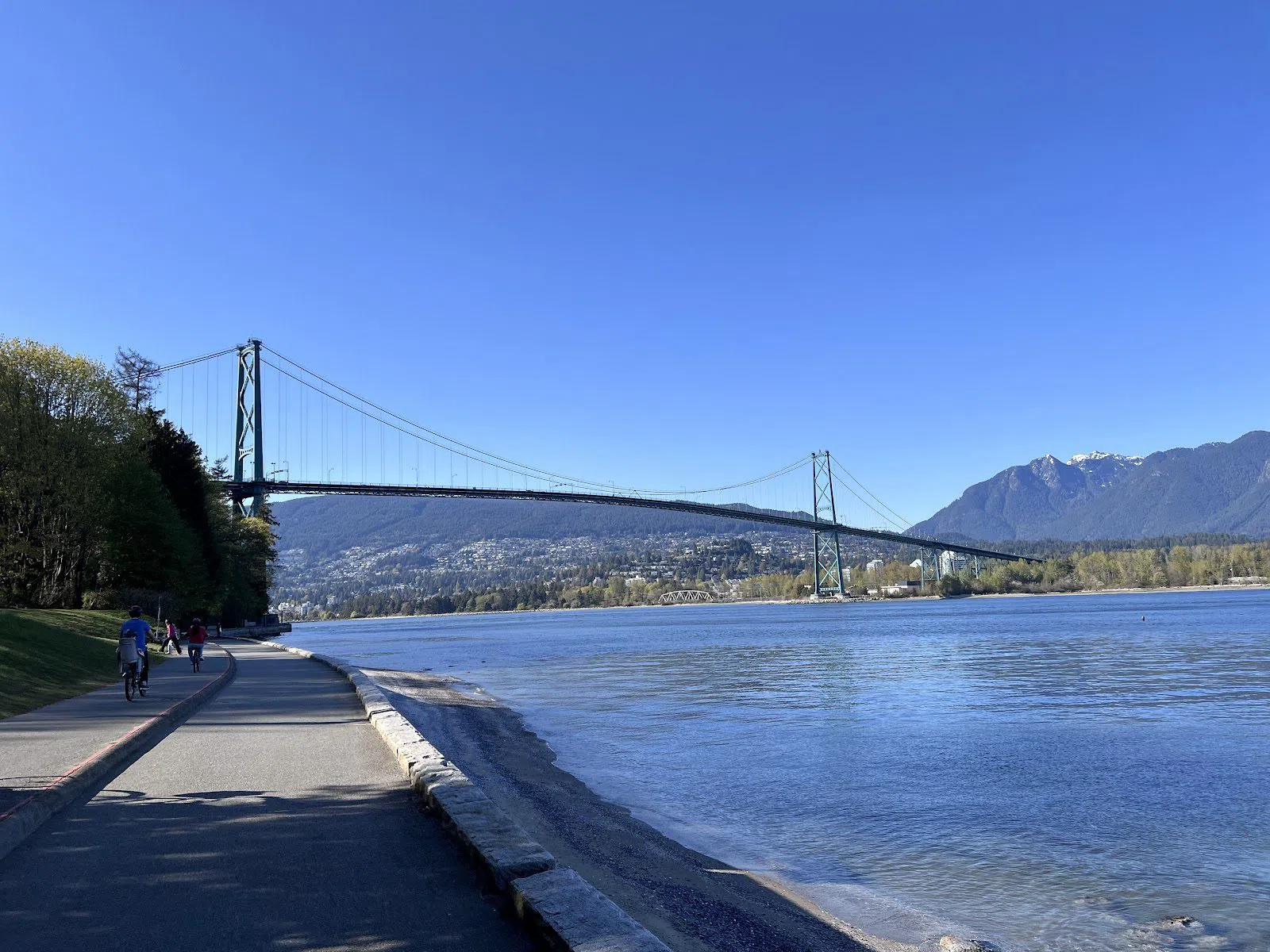
The rain here rarely arrives as a storm. It settles in around mid-October as a fine grey wash, soaks your shoes somewhere near kilometre three, and stays until April. The city has built its running culture on top of that fact rather than around it. Turn up in a decent shell on a wet Tuesday and the seawall that is shoulder-to-shoulder in July belongs to you.
What follows is one ten-kilometre line through the wettest ground in the city, plus the clubs, the kit shops and the recovery stop that make it worth repeating. Every metre of the route is free, public, and reachable on foot or by SkyTrain and bus. Nothing in this article needs a paid shuttle or a hire car. The wider city basics (districts, transit, when to come) sit in the Vancouver guide; this is the running version.
The ten kilometres from CRAB Park to Sunset Beach
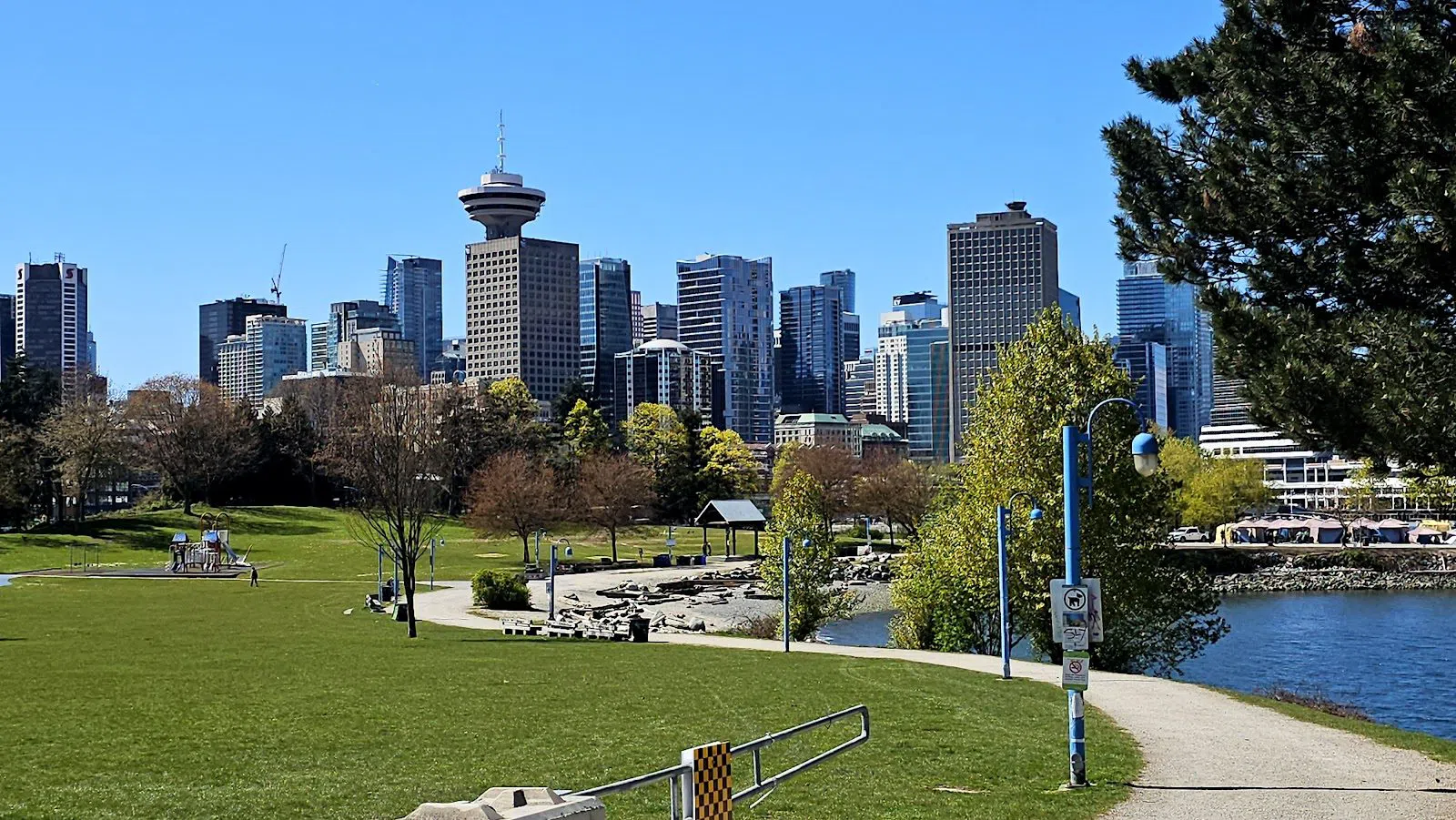
Start at CRAB Park at Portside (Downtown Eastside waterfront), because the first kilometre is the one nobody puts on a postcard and the one you will remember. It is an open, ungated park with a gravel shoreline and container cranes working directly across the water, which in low cloud is cinematic. The long-running tent encampment was cleared in late 2024 and the waterfront path is fully walkable again, but this is still the edge of the Downtown Eastside: run it in daylight, and if you are alone at dusk in December, start further west instead. A crew of any size can regroup here without asking anyone's permission.
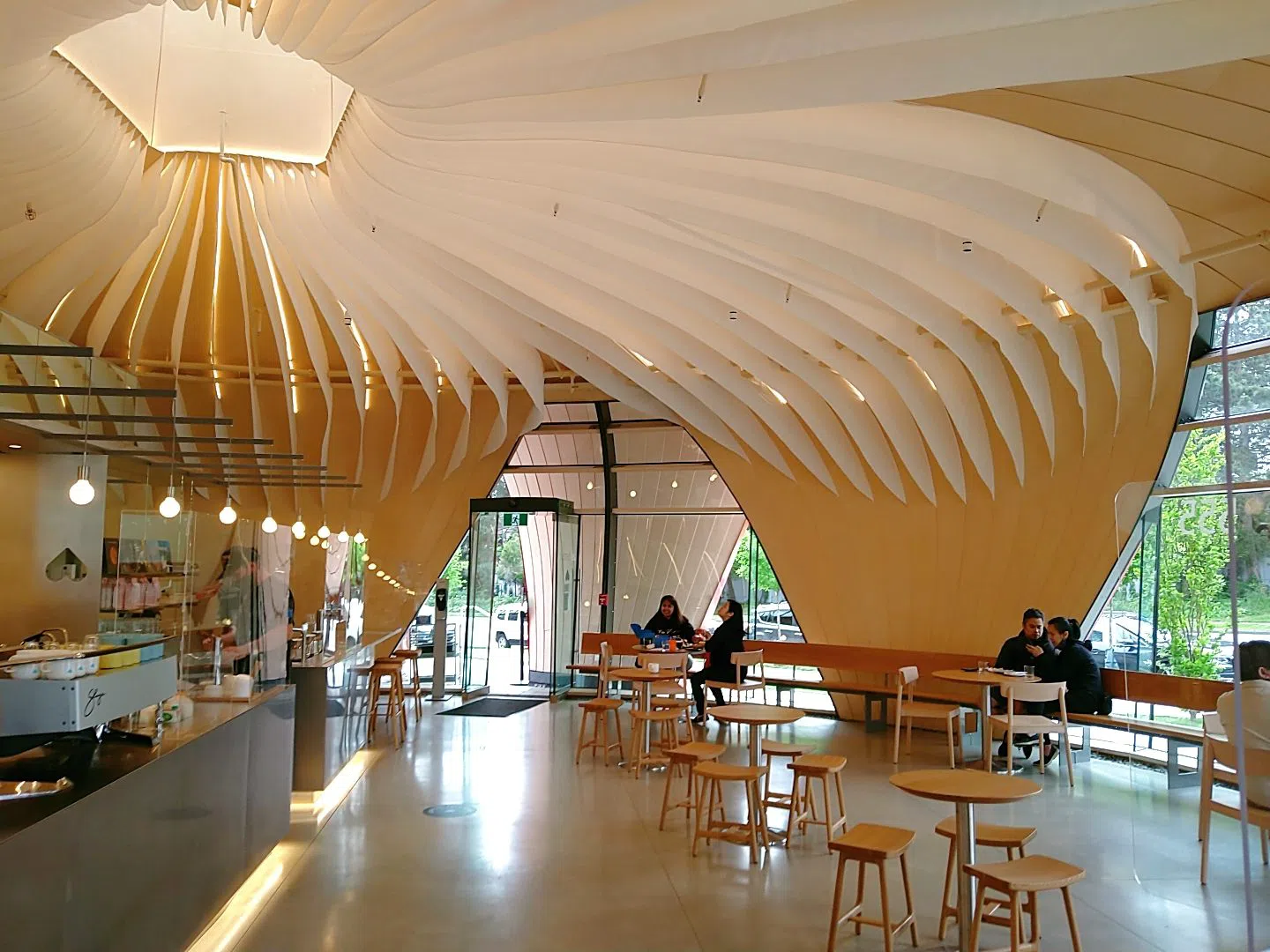
At roughly the one-kilometre mark, if you want caffeine before the long stretch, cut up to Nemesis Coffee (302 West Hastings, on the Gastown fringe). Walk-in only, communal seating that suits a run crew, C$5–C$15, and no wifi by design, which is why the tables turn fast enough for six damp people to sit down. Expect a queue at weekends. Croissants and matcha are the reason locals stand in it.
From there it is flat, marked seawall the whole way along Coal Harbour, reaching the Stanley Park Seawall (West End, at the park entrance) at about three kilometres. Two things before you commit. The pedestrian side is one-way counter-clockwise and the cyclists have their own marked lane; running against the flow marks you instantly as a visitor and is genuinely dangerous on a wet corner. The Third Beach to Prospect Point slope section also takes short maintenance closures most autumns, so check the city's park page the morning you run. There are race-day closures too, SeaWheeze on 8 August 2026 among them.
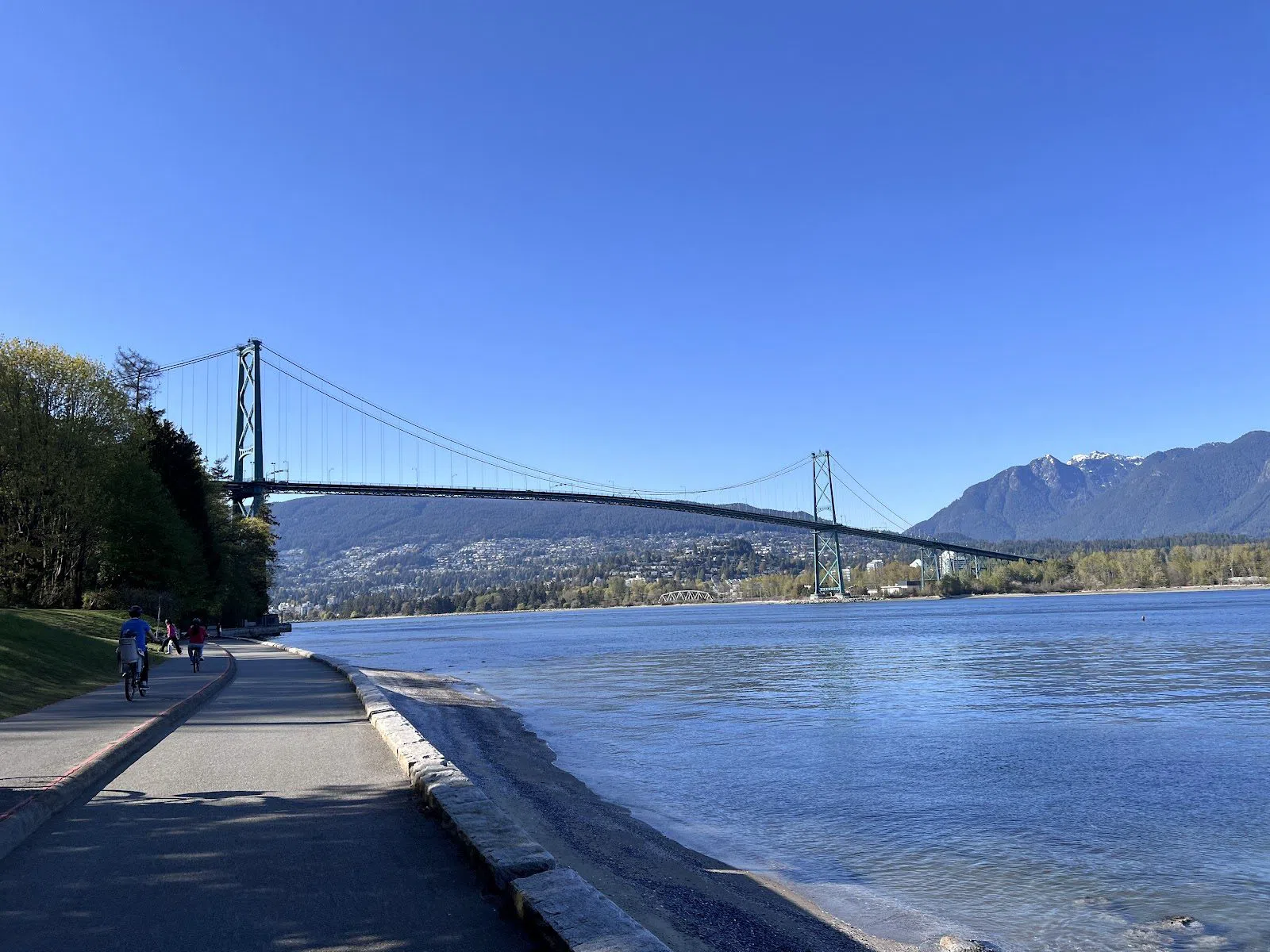
Going counter-clockwise you pass Brockton Point at around 4.5km, the Lions Gate underpass at 6km, and the Prospect Point slope and Third Beach at about 7.5km. Second Beach comes up at 8.5km, English Bay at 9.5km, and the ten lands you at Sunset Beach by the north foot of the Burrard Bridge. At 5:30 per kilometre that is about 56 minutes; at an honest conversational 6:30 it is a little over an hour. This is the stretch that is better in rain: the crowds evaporate and the cyclist traffic thins to almost nothing.
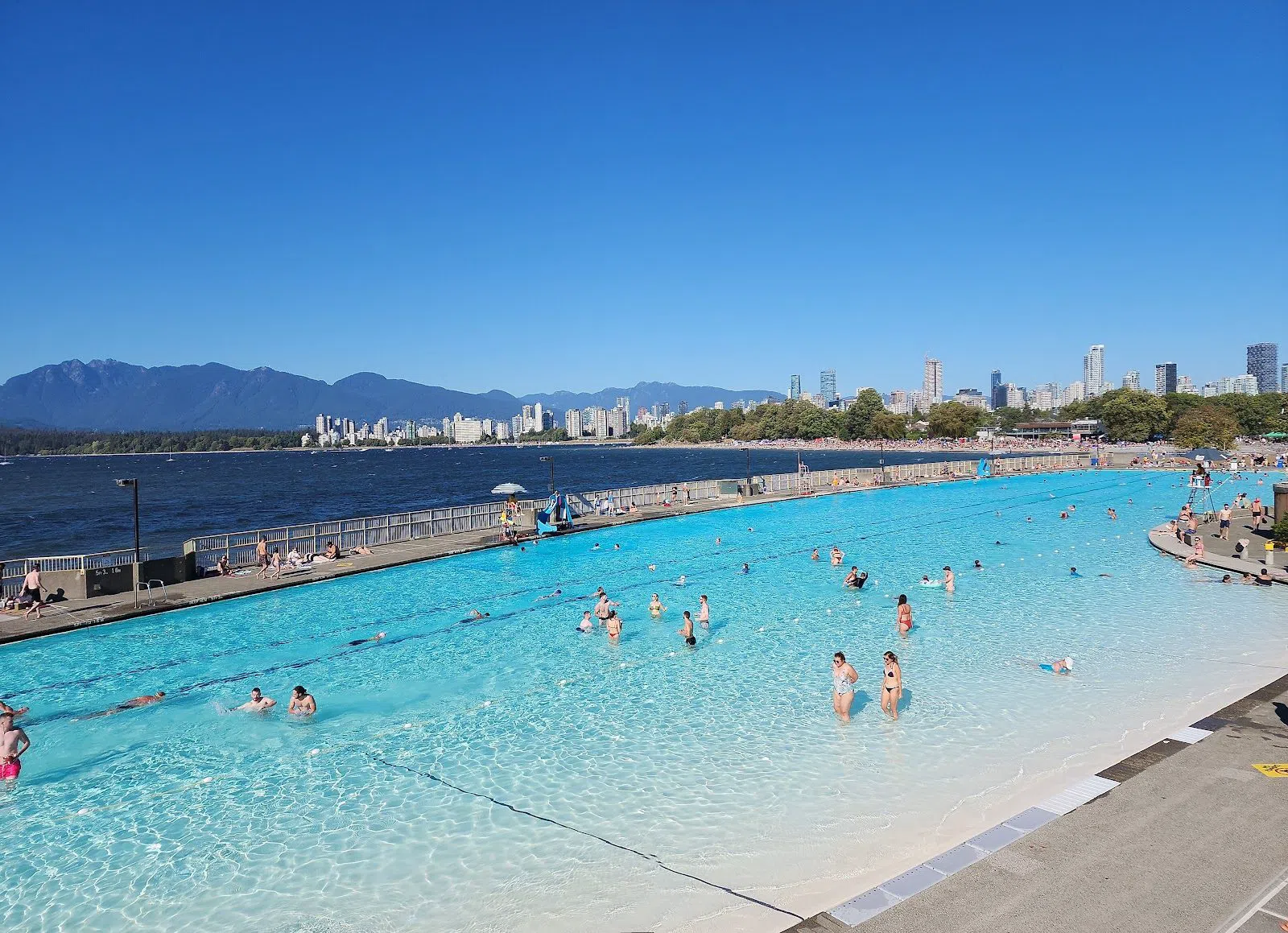
Two extensions are worth the extra distance. Cross the Burrard Bridge, roughly 800 metres of exposed span and the one place on the route where a side wind will make you work, then follow the shoreline west to Kitsilano Beach Park (Kitsilano) at about 11.7km. The seawall here is wide enough to run three abreast, which none of the downtown sections are. Kits Pool is open mid-June to 13 September 2026 only and costs about C$7 for an adult, so from October onward this is a turnaround point and not a swim stop. The other option is to cross the bridge and turn east along the south False Creek seawall for about 3.5km, which drops you into Mount Pleasant with the kit shop, the sauna and the brewery all within a few hundred metres of each other.
Plan your Vancouver trip
Live prices from our booking partners.
Free cancellation on many rooms. We may earn a commission when you book.
Two detours for when you actually want the mud
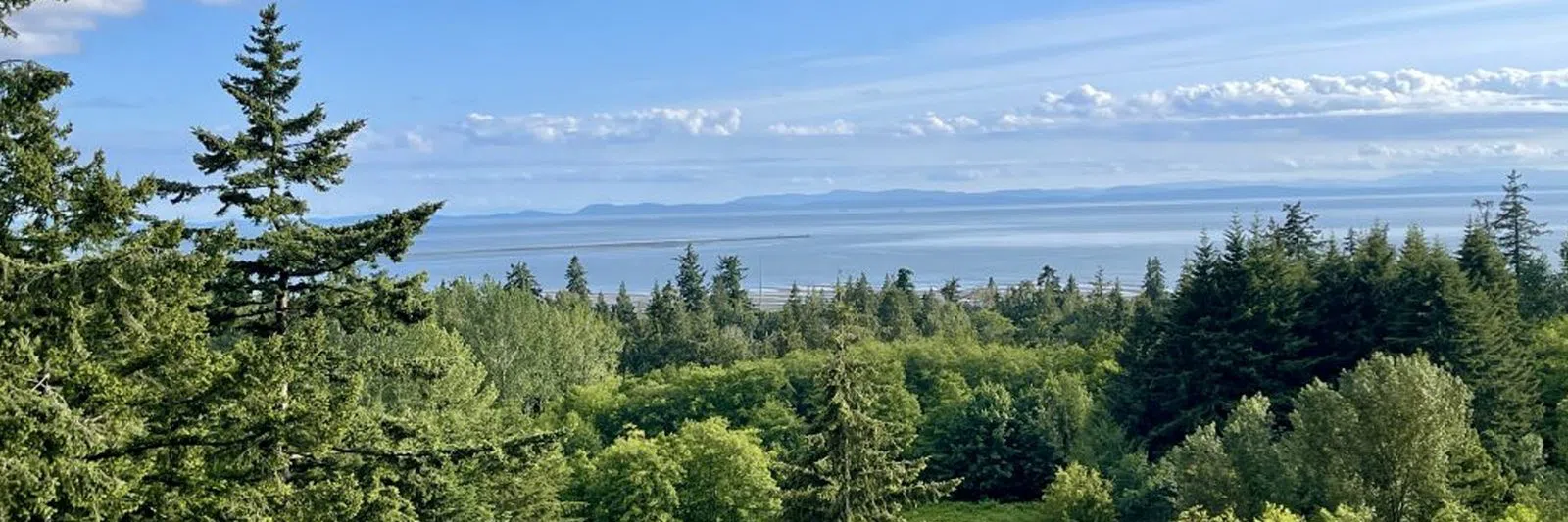
The seawall is paved. If the point of coming to a rainforest city is to run in a rainforest, take a morning out to Pacific Spirit Regional Park (western edge of the city, near the university). It is a free Metro Vancouver park, open 7am to 10pm daily, with wide main trails that handle a large group without anyone having to run single file. Getting there is a bus ride of roughly forty minutes from downtown with one change: no entry fee, no shuttle, no parking argument. From November to March, expect ankle-deep mud on the lesser trails. Stay on the main ones and you will still get soaked from above, which is the correct experience.
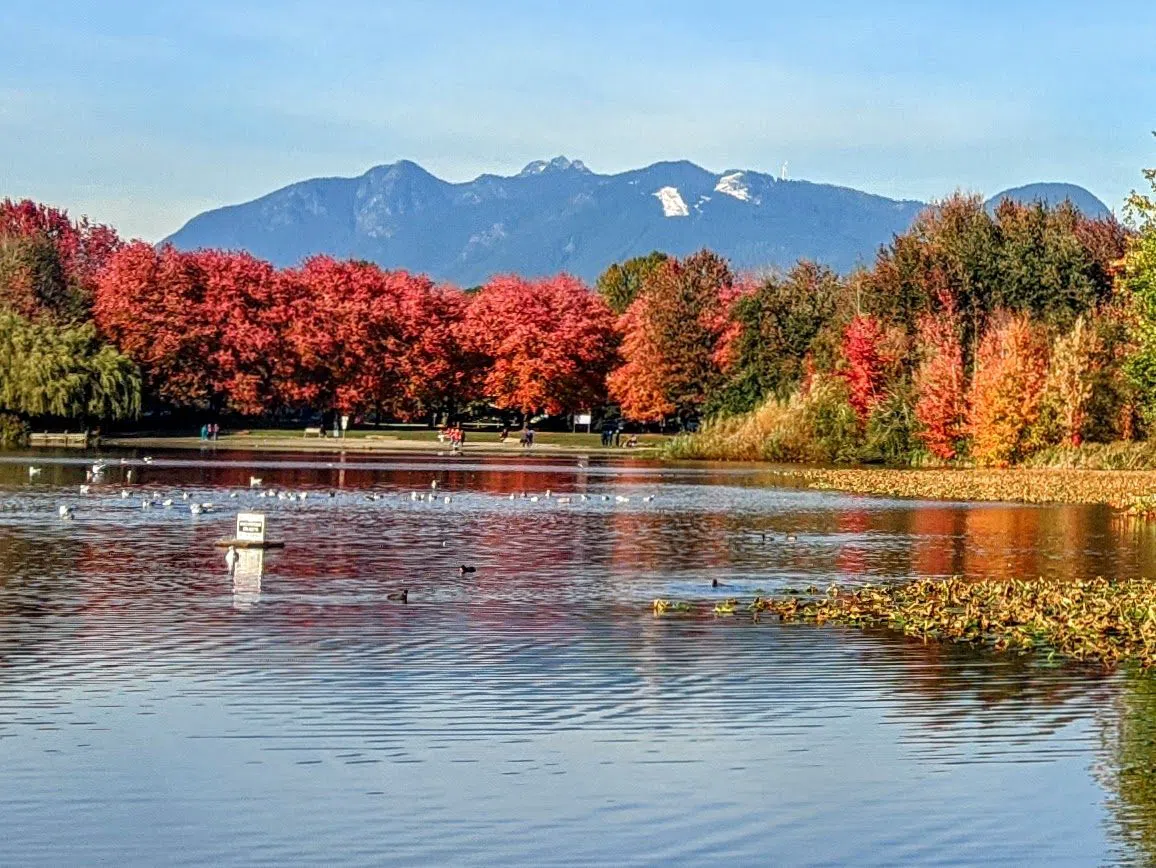
The other detour is John Hendry Park (East Vancouver, known to everyone as Trout Lake), a couple of kilometres east of the Commercial–Broadway SkyTrain station. The loop around the lake is a bit under two kilometres and narrow in places, so run single file when it is busy with dog walkers. After a week of rain the gravel turns to soup. That is the honest local version of the Raincouver running scene, and four laps of it in December will teach you more about your shoe choice than the entire seawall.
The only climb worth building a session around
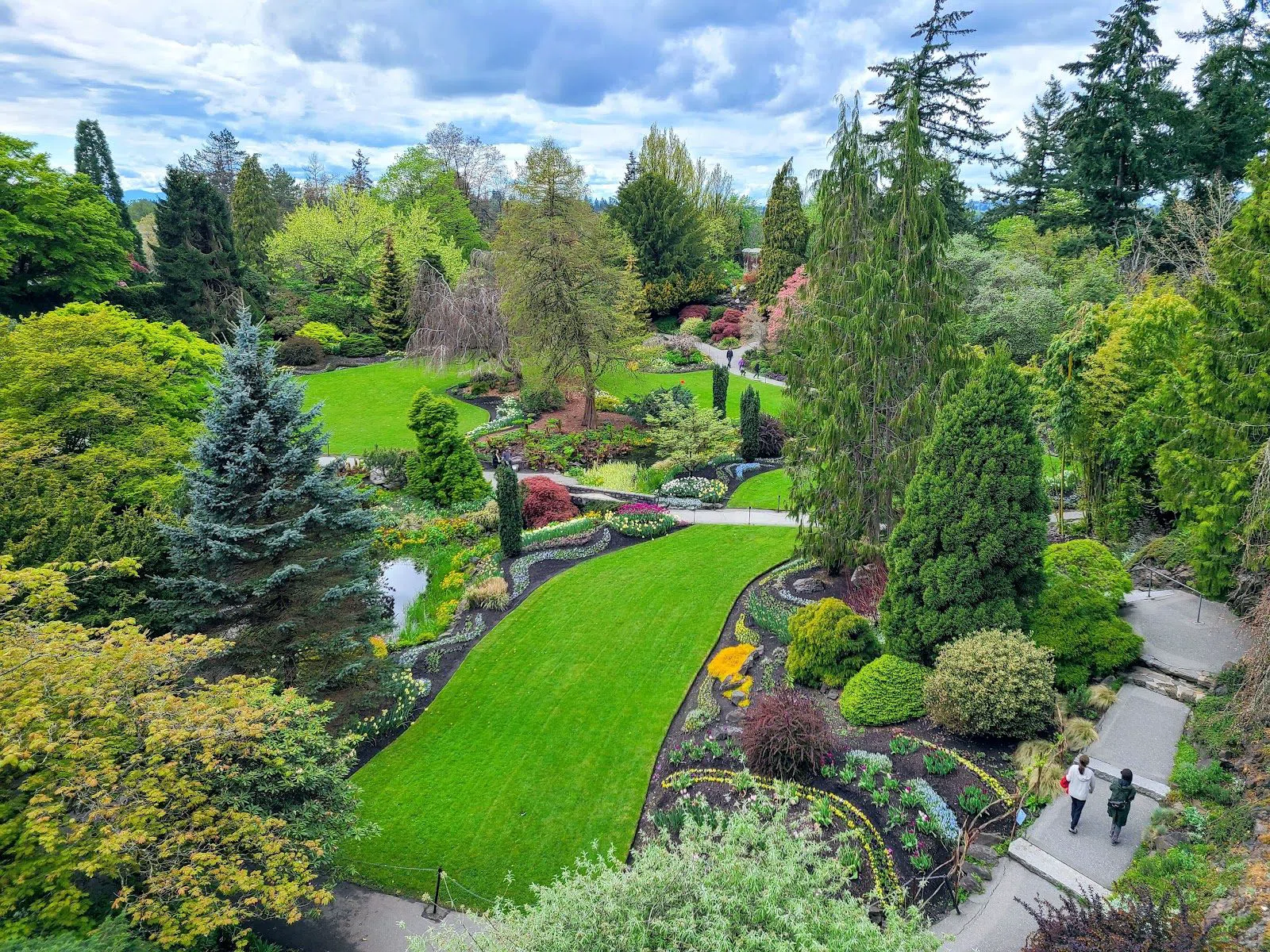
Vancouver's ten-kilometre routes are flat to the point of monotony. The exception is Queen Elizabeth Park (Riley Park, at 33rd and Cambie), about 3.5km south of Mount Pleasant and the only real hill inside a city 10K: 152 metres of gain with stairs and paths that a group can use without a permit. Low cloud erases the skyline view more often than not between November and February. When it does, the Bloedel Conservatory dome at the summit is the warm, dry bail-out, around C$8 for an adult and ticketed separately from the free park. A sensible session is three stair repeats bookended by the run out and back, which comes to roughly 10km door to door from Main Street.
Running with locals rather than past them
Four doors, and they suit different people.
East Van Run Crew (East Vancouver) is the most welcoming door in the city for a solo traveller: free, no registration, 5km and 10km options every Monday at 6:30pm, explicitly no-drop and no judgment. The catch is logistical. The start point is a different brewery each week and gets announced on their socials the Sunday before, so check before you turn up somewhere hopefully. Buy your own beer afterwards.
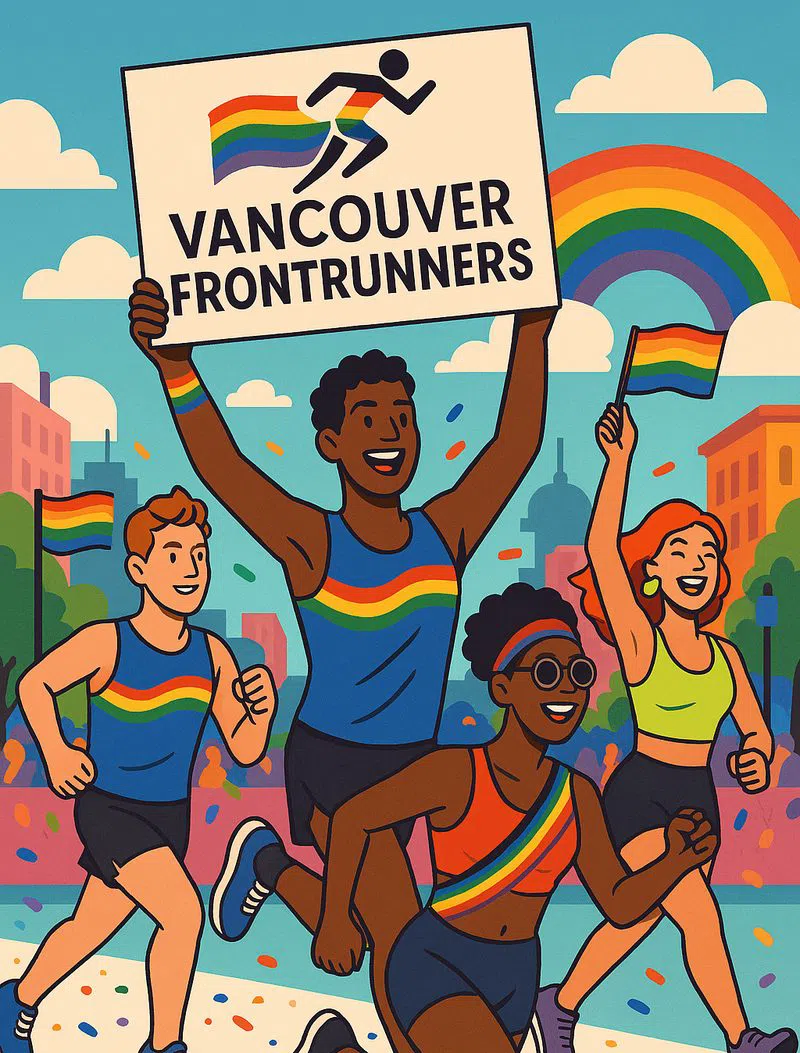
Vancouver Frontrunners (West End and Yaletown) has been going since 1983, has around 150 members at every pace including walkers, and runs Wednesdays at 6:30pm from the Yaletown Roundhouse and Saturdays at 9am from Brockton Oval inside Stanley Park. Visitors are welcome and it is free to try, with a modest annual membership if you stay. If you would rather not cross the park alone on a dark Saturday morning, meet the group at Alberni and Chilco at 8:40am and walk in together, which tells you most of what you need to know about the club. It is an LGBTQ2+ club, out in all weather, and it also puts on the annual Pride Run and Walk.
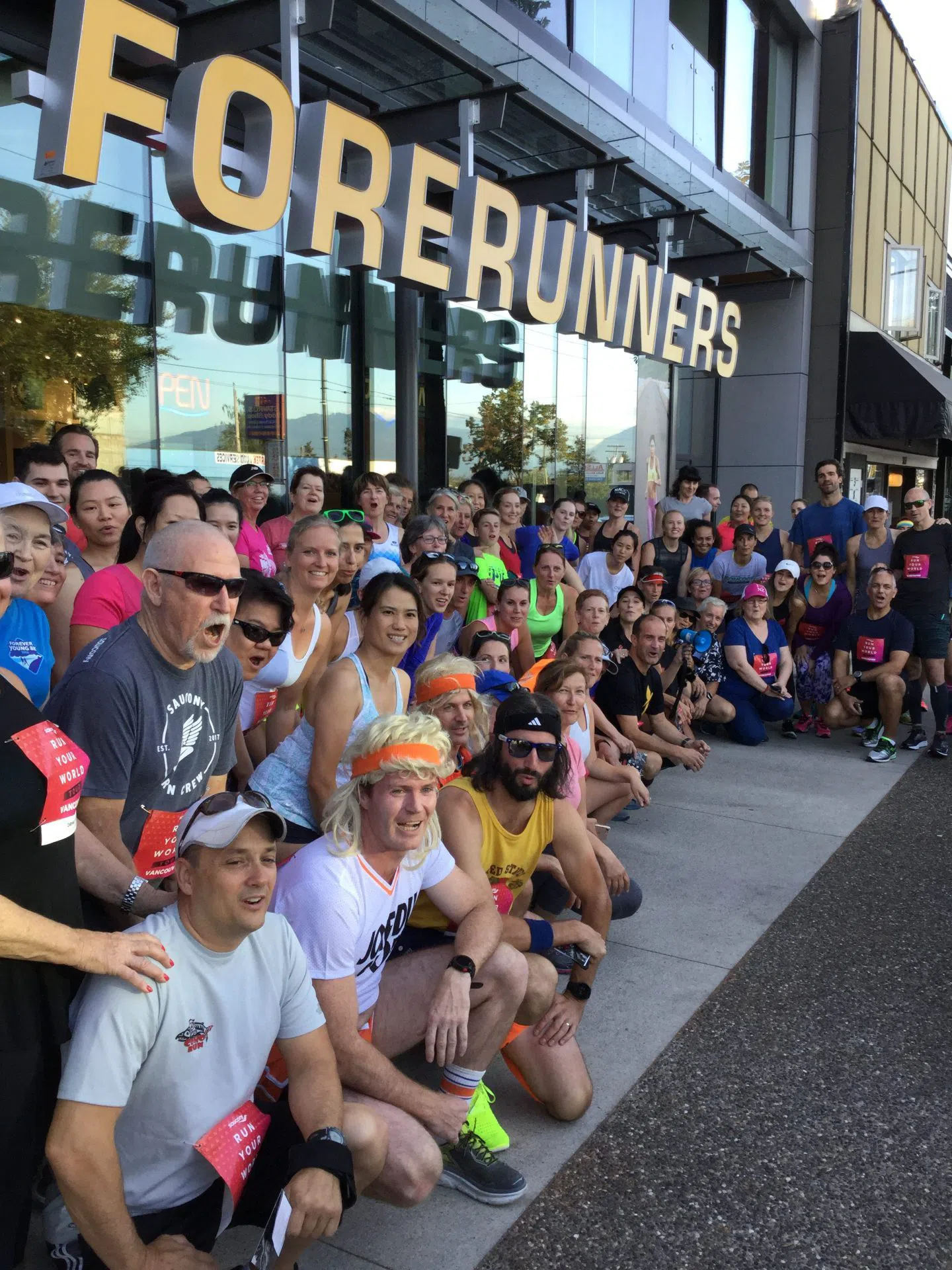
Forerunners (Kitsilano, 3502 West 4th Avenue) has been the city's running shop since 1986 and hosts a free social run every Saturday at 9am with 6km and 12km options. Visitors and groups can simply show up. Coached clinics run from about C$5 as a drop-in to C$75 for a twelve-week block, which only makes sense if you are in town a while. There are three locations, so name the one you are meeting at when you arrange it with anyone: turning up at the Main Street shop for a West 4th run is a classic wasted morning.
RunAsYouAre (west side) is the shop formerly known as Vancouver Running Company, rebranded in 2024 with the same crew and a run-health and diagnostics angle. It hosts the Nike-backed Flight Crew Run Club and takes corporate and group runs on request, which makes it the practical option if you are travelling with colleagues. Open seven days, roughly 10 or 11am to 7pm.
What to wear and where to buy it
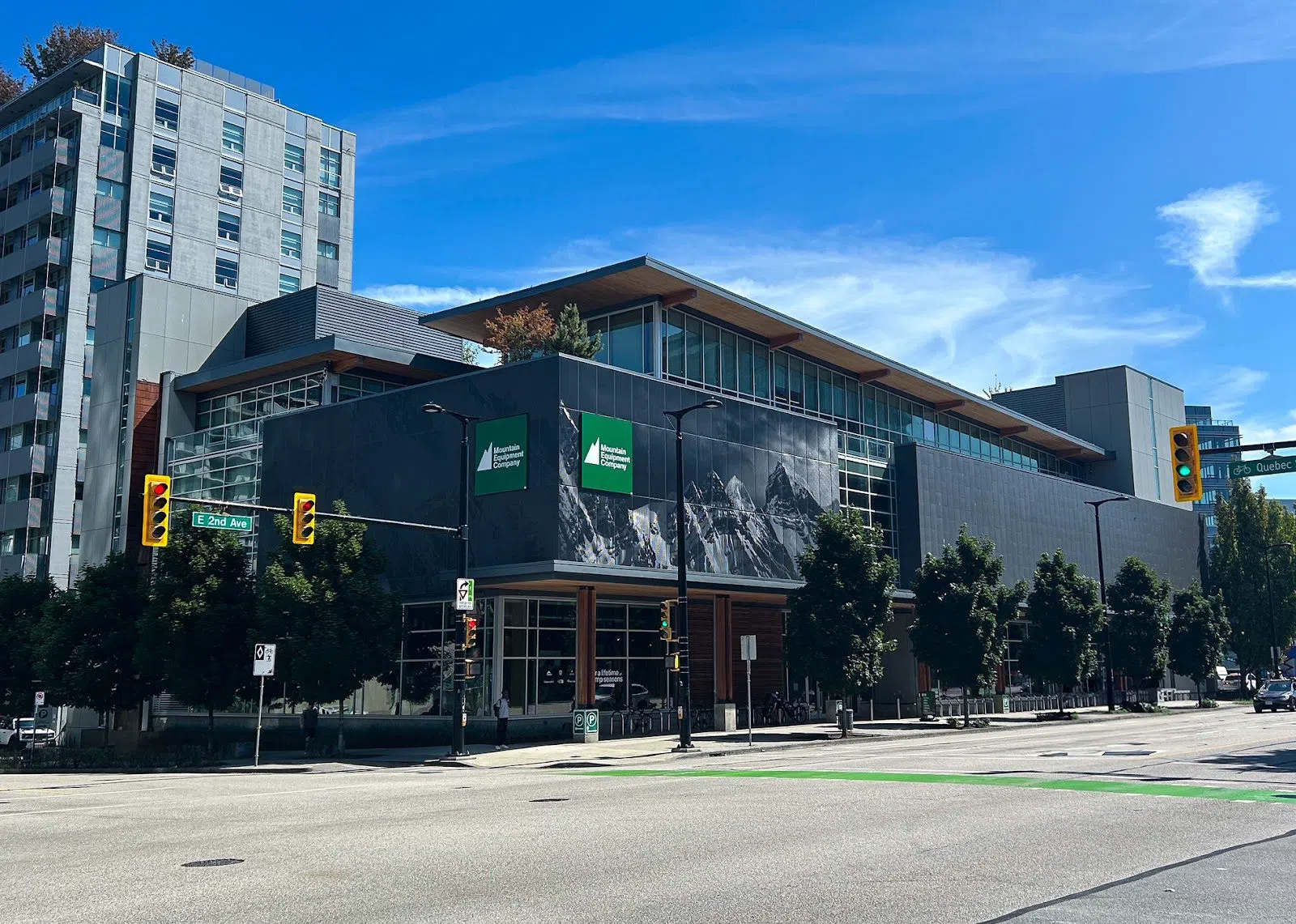
The route is built around one shopping stop. MEC Vancouver (Olympic Village, a two-minute jog off the False Creek seawall) sells running rain shells from about C$80 to C$400, walk-in, with no group size limit. It is Mountain Equipment Company now, not the co-op, so there is no membership card to buy first; the old assumption dies hard.
What actually matters between November and March: a shell you can run in without boiling, a cap with a brim to keep rain out of your eyes, and shoes with real tread if Trout Lake or the forest is on your list. Shoes run C$150–C$300 at either specialist shop, and RunAsYouAre is the one to visit if you want the gait and run-health side of it before committing. Cotton anything is a mistake here in a way it is not in a dry climate.
Sauna first, beer second
The correct end to a 10K in the rain is heat. Tality Wellness Mount Pleasant (Mount Pleasant, fifth floor at 107 East 3rd Avenue) does sauna and cold plunge sessions for roughly C$40–C$60, open daily 8am to 10pm and until 11pm on Friday and Saturday, and takes private group bookings. Locals genuinely run and then sauna; it is not an imported wellness trend. It sits a few hundred metres off the False Creek seawall, so it lands naturally at the end of the Mount Pleasant extension. One warning: the nearby Gatherwell Mount Pleasant site has closed, so do not follow an old listing to the wrong address.

Then Brassneck Brewery (Mount Pleasant, 2148 Main Street), the natural finish line and the district's benchmark tasting room, at C$6–C$9 a glass with snacks from The Magnet next door. Be clear on the door policy: walk-in only, no reservations and no private bookings. That is deliberate policy, not snobbery. A pair or a threesome will get seats without much drama. A crew of ten should split into twos and threes or arrive early, and should not expect the bar to accommodate a booking however politely you ask.
Racing it properly in 2026
If you would rather run this route with numbers on, two dates. The Vancouver Sun Run is Canada's largest 10K and falls on Sunday 19 April 2026, entry around C$60–C$75, with individual and corporate or team entries; registration opens the previous October and the popular waves fill. Its course is the closest thing to an official version of this article's route: downtown out to the West End, English Bay, over the Burrard Bridge and through Mount Pleasant.

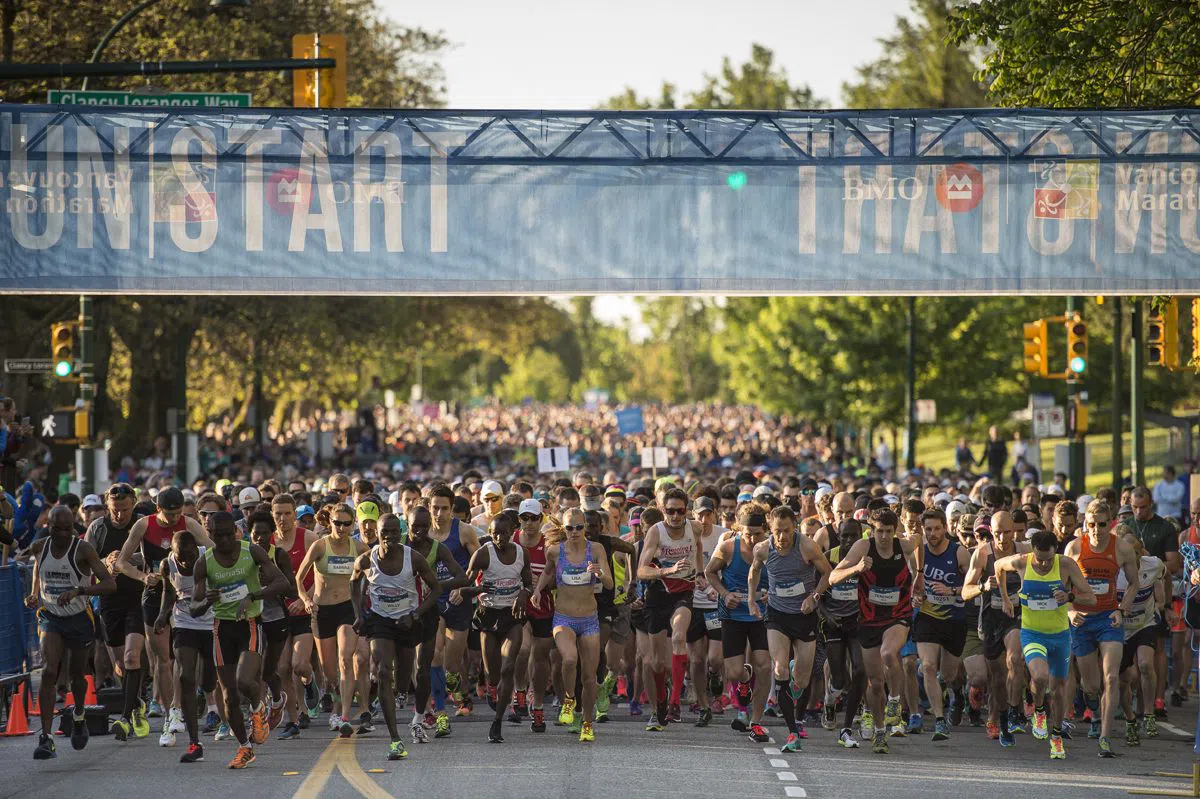
The BMO Vancouver Marathon weekend is Sunday 3 May 2026, organised by the RUNVAN non-profit, with a marathon, half, 8K and a kids' run, and team and charity entries. Prices run about C$80–C$180 depending on distance and how early you enter. For a visitor who does not want to build a trip around a race, the 8K is the low-commitment way to run the seawall stretch closed to traffic.
Practical notes
Transport. You do not need a car. The whole 10K is walkable to and from downtown hotels, Mount Pleasant is a short SkyTrain hop or a 25-minute walk from the centre, and the forest park is a bus ride. Load a card or just tap a contactless bank card at the gate; fares are zone-based and cheapest at weekends.
Cash. Effectively unnecessary: tap payment works everywhere on this list, including the brewery and the coffee shop. Tipping is customary at the bar and café, not at the parks.
Timing. October to April is the wet season and the whole premise of this route. Mornings are usually the calmer half of the day on the seawall; Saturday from 9am is when the clubs are out. Check the park page for the Prospect Point slope before an autumn run, and avoid the seawall entirely on 8 August 2026 and the two race Sundays unless you are entered.
Budget. The run itself costs nothing. A realistic day is C$5–C$15 for coffee, C$40–C$60 for the sauna and C$6–C$9 a glass afterwards. Call it C$60–C$90 without the kit, or a good deal more if the rain talks you into a shell. For beds, the practical bases are downtown or Mount Pleasant depending on whether you want the seawall or the finish line on your doorstep; compare rates with a Vancouver hotel search before booking a race weekend, when downtown prices climb.
Before you go
Is the Stanley Park Seawall open year-round, and which way should I run it?
It is free and open all year, but the pedestrian side is one-way counter-clockwise and cyclists have their own marked lane, so do not run against the flow. The Third Beach to Prospect Point slope section closes briefly for maintenance most autumns. Check the city's park page before you set out, and expect race-day closures including SeaWheeze on 8 August 2026.
Can a visitor just turn up to a Vancouver run club?
Yes, all four on this route. Forerunners has a free social run every Saturday at 9am from 3502 West 4th Avenue, with 6km and 12km options. East Van Run Crew meets Mondays at 6:30pm, free and no-drop, though the start is a different brewery each week and is announced on their socials the Sunday before. Vancouver Frontrunners is free to try, Wednesdays 6:30pm at the Yaletown Roundhouse and Saturdays 9am at Brockton Oval.
Is CRAB Park a safe place to start a run?
In daylight, yes. The tent encampment was cleared in late 2024 and the waterfront path is walkable again, but it runs along the edge of the Downtown Eastside, so keep it to daylight hours and start further west if you are alone after dark.
What do I need to wear to run in Vancouver between November and March?
A running-weight waterproof shell, a brimmed cap and shoes with real tread if you are heading to Trout Lake or the forest trails. MEC Vancouver in Olympic Village sells shells from about C$80 to C$400 and you do not need a membership. Shoes are roughly C$150 to C$300 at Forerunners or RunAsYouAre.
When are Vancouver's big road races in 2026?
The Vancouver Sun Run 10K is Sunday 19 April 2026, about C$60 to C$75, with registration opening the previous October. The BMO Vancouver Marathon weekend (marathon, half and 8K) is Sunday 3 May 2026, roughly C$80 to C$180 depending on distance and entry date.